Not logged inChampdogs Information Exchange
Forum Breeders Help Search Board Index Active Topics Login

Find your perfect puppy at Champdogs
The UK's leading pedigree dog breeder website for over 25 years

Topic Other Boards / Foo / Pedigree dogs exposed
1 2 3 4 Previous Next  
- By Stooge Date 29.02.12 11:38 UTC Edited 29.02.12 11:41 UTC

> Is there anything to say the entire litter might not have problems if they all take after their dad?


I don't know if the condition requires both parents to be carriers but shouldn't they have a 50/50 chance at least of being clear if one parent is?  You might have rotten luck and suffer a poor outcome but at least the breed has large litters and thus increasing your odds :)
The thing that surprised me was that she did not import a male as there would be much more potential to use with several different lines, I would have thought.
- By Jeangenie [gb] Date 29.02.12 11:43 UTC Edited 29.02.12 11:52 UTC

>Does anyone know how it works with the LUA Dalmatians?


I can help with that. :-) There have been at least three LUA dals imported, two bitches and one dog (that I know of). Fiona (the one on the programme) has had a litter to a UK dog, and I think I'm right in saying that two of the litter were DNA tested and shown to have inherited the LUA gene. The other bitch, Sally, has (I believe) recently been mated to a UK dog. The imported LUA dog, Merlin, has sired more than one litter (though he may have been used again since) and I think 7 of the litter have inherited the LUA gene.

Up until the imports no UK dal had the LUA gene, so mating a LUA to any UK dal will give a litter with, on average, half inheriting the LUA gene. The rest of the puppies will be no different healthwise to any other dal.
- By Goldmali Date 29.02.12 11:45 UTC
I don't know if the condition requires both parents to be carriers but shouldn't they have a 50/50 chance at least of being clear if one parent is?  You might have rotten luck and suffer a poor outcome but at least the breed has large litters and thus increasing your odds :-)

That's why I wondered how it works. Having worked with a condition in cats where technically speaking it should be 50/50 I know you might as well end up with all affected or all clear. The big question is -if pups are tested, who will want to buy the ones not clear?

Yes, you've got a point about a dog -or even better one of each sex. Maybe there are plans, who knows.
- By Goldmali Date 29.02.12 11:46 UTC
Posted before I saw this -thanks JG! That all sounds positive!
- By Stooge Date 29.02.12 11:47 UTC

> In each case a few teaspoons of Buttercup syrup and a bowl of hot water with vick or olbas overnight in the pug's sleeping space has been a quick and effective cure


You may have a quick and effect cure, Gwen, but surely the dog should not have been in need of anything to help him breathe when sleeping?
I'm sure there are comfortable healthy, example of the breed but perhaps you are seeing a self determining group by seeing those that sign up for activity pursuits.
Try as I might, I do struggle to see how this type of anatomy cannot be sailing very close to causing problems in many, if the not the majority of instances.
- By Alysce [gb] Date 29.02.12 11:48 UTC
I'd be wary about the accuracy of the average COI for the breed too.  I believe that the foreign dogs that were initially imported at the start are not on the system also dogs that were health tested in their country of origin are not on there unless retested in this country (correct me if I'm wrong, someone)!
- By Brainless [gb] Date 29.02.12 11:50 UTC

> one thing that keeps going around in my brain is how much the common, present day model of small hobby breeder may be actually contributing to the problem.
>
>


Yes I agree.  We now more often keep our dogs for life, cannot run on several puppies to keep the best one (but have to make an educated guess at 8 weeks or so), we don't keep large numbers or breed enough litters to see patterns or problems developing in our own kennel until it's too late.

Breeders in the past and to a certain extent are in 'competition' with each other, some like to keep their plans close to their chests.

What needs to happen is that breed clubs and breeders need to think more of themselves and their dogs as part of a bigger picture.  We keep advising potential breeders that they cannot work in isolation, and need to join breed clubs and research their lines.

We need to consider no only what the implication of mating our bitch to dog A will have for us, but what it will do overall, where will the progeny be able to go.  We will have to have much more co-operation between breeders.

We are seriously hampered in our efforts when our chosen retained brood or stud is less than ideal, we can't ask the Pet owners who bought their litter-mates to lend us their dog or bitch, in most cases they  are already neutered,a nd the owners too attached to allow it, even just to do the health testing.  Few of us can afford to pay for health testing whole litters of pups at £500 a time just for genetic information.  Owners often do not report issues, at a time then they may have prevented breeding something into the line.

This is the major weakness in the arguments from Jemima and other interested parties, the theory of what needs to happen may  be sound and needs to happen, but practical application is not going to be easy at all. 

I am in a numerically small breed, that is pretty healthy, where breeders are pretty responsible and the people they sell to who become more interested in the breed are actually afraid to breed, as the responsibilities are onerous (lifetime responsibility for puppies), finding the right homes is always worrying,a nd even then there are health issues that may crop up, finding the time and money to do it. 

In 20 years we have gone from around 150 pups registered a year (was 400 in the 70's) to two out of the last three years to less tan 50. 

We have lost the breeders who had room for half a dozen or more dogs,a nd have now mainly owners who can keep two or three.  So with each breeder we loose we need to have four new potential breeders that will work together.  Many who do breed will do so only once every few years, so how can they see where the breeding is going from such low numbers.

We are in pretty reasonable shape re hip scores, but experts agree that the progeny's scores once a dog/bitch has 20 offspring scored is more meaningful than their own score.  Well no dog is likely to get that number before they are dead, and if a problem crops up, what do you do, loose the generations altogether with nothing left.

Lets take that Boxer who has sired loads of pups and only now is it becoming apparent they re implicated in a kidney problem.  I am sure had that been known in advance it wouldn't have happened, but how do you proceed now with the healthy descendants, there is no gene test.  To get gene tests you actually need affected animals, which most of us avoid producing.

that was the situation with PRA in our breed , breeders avoided the lines where it was produced until we only had the very odd case confirmed.  In the last 20 years we had four cases and were able to supply DNA samples of them and relatives for testing, not nearly enough samples.  it was only chance that comparing the samples to those conditions already identified in other breeds that it was found ti was the same one as in Labradors etc prcd-PRA, and when tested a high number of dogs were found to be carriers.  In a breed where any dog sires few litters, carriers may never be mated to another carrier, or even if they are and an affected is produced, it may not be eye tested (and being late onset the pet owner will not realise why the dogs sight worsened in old age).

Other conditions are far more complex, and as is often said there is more harm done if you throw the baby out with the bathwater.

Personally in future I will try to reduce the COI's when breeding certainly below 12.5% but more in line with below 6.25% or less.

Certainly within the next year or two all new matings for all breeds should have COI limits imposed to below 25% to start with (as that is what first degree relative, which are now banned, come to), then down further in say another 10 years to 12.5%.

Quote from KC Mate select:

"The puppies born to a mother/son, father/daughter or brother/sister mating (which the Kennel Club will no longer accept for registration), would be at least 25%. The inbreeding coefficient of puppies born from a grandfather/granddaughter mating would be at least 12.5%."

My highest COI bitch at 13.7% result of half brother sister mating.  The pedigree data used to calculate this result extended back as far as 16 generations with the first 5 generations being fully complete.

The common parent was my own healthy (still is at 12) at the time 8 year old girl, with members of 3 litters health tested and some with their own progeny. 

The parents had imported sires from different countries. 

This bitch when mated was mated to an outcross overseas to produce a litter of COI 0.5%.  The pedigree data used to calculate this result extended back as far as 17 generations with the first 4 generations being fully complete.

We are limited in being able to calculate background inbreeding as of course by out crossing to overseas dogs the Kennel club will never have complete pedigrees for more than 4 or 5 generations

Of course in some ways breeders prefer the devil they know, as often things undesirable come in with an outcross only coming to light down the line.
- By Stooge Date 29.02.12 11:51 UTC

> The big question is -if pups are tested, who will want to buy the ones not clear?
>


Like JG says the owners of these will be no worse off than the present owners of dalmatians but this also harks back to my comments about being more tolerant of pricing policies.  If breeders are going to be brave enough to do these things and perhaps produce more than average numbers of litters I do feel we should perhaps be far more tolerant of price adjustments to help them find places for the less "desirable" offspring.
- By Jeangenie [gb] Date 29.02.12 11:51 UTC
You might find this interesting. :-)
- By Goldmali Date 29.02.12 12:32 UTC
Thanks JG. What struck me the most was the fact she'd received hate mail after winning the ticket!!! That is just unbelievable. :(
- By Jeangenie [gb] Date 29.02.12 12:53 UTC
The temptation, of course, is to breed from the LUA offspring regardless of whether you would if they were HUA. A difficult dilemma for their owners.
- By Stooge Date 29.02.12 13:13 UTC

> The temptation, of course, is to breed from the LUA offspring regardless of whether you would if they were HUA. A difficult dilemma for their owners.


I suppose it depends on what grounds you would have, normally, excluded them from breeding. 
A few years ago the Dandie Dinmont Club put out a request for anyone with a healthy bitch to consider breeding regardless of show quality etc.
- By Brainless [gb] Date 29.02.12 13:22 UTC

> That all sounds positive!


Problem is that if your relying on a small number of individuals (outcrosses) to bring in a gene, the gene pool will then have an over representation of that individuals traits good and bad.  the bad may not become evident for generations, until at least some inbreeding occurs.

This is what has always happened.  No decent breeder knowingly deliberately breeds to produce unhealthy pups.  All living creatures may have a health issue at some point, and we won't know it is an inherited issue until statistically significant numbers are produced and then often it is too late to do anything more than take remedial action. This will always be true of domesticated animals as the ruthlessness of nature does not apply.
- By Brainless [gb] Date 29.02.12 13:26 UTC

>I'd be wary about the accuracy of the average COI for the breed too.


When you get a COI, on the right it weill tell you how this was calculated, based on how many generations.  For example my last litter was 0.5%, but I know there are common ancestors 10 or more generations back which would increase it. 

It says:
About this calculation
The pedigree data used to calculate this result extended back as far as 17 generations with the first 4 generations being fully complete.

The Mate Select computations are based upon data compiled from pedigree records and data submitted from breeders. As such all information and/or data on the site is provided on an 'as is' basis. Every effort has been made to report information accurately, but the Kennel Club assumes no responsibility for the content or the use or interpretation of the information published.
- By Jeangenie [gb] Date 29.02.12 13:34 UTC

>I suppose it depends on what grounds you would have, normally, excluded them from breeding. 


The current breeders are being very responsible and making sure that all breeding animals are BAER++ and have good hip and elbow scores, but we all know that Mother Nature can throw a curve-ball out of the blue. Deafness, bad hips, an unexpected temperament issue - all these could rear their ugly heads, and the gene pool isn't so small that it'd be worth the risk.
- By Stooge Date 29.02.12 13:35 UTC

> Problem is that if your relying on a small number of individuals (outcrosses) to bring in a gene, the gene pool will then have an over representation of that individuals traits good and bad. 


The whole thing has to be weighed against the problem it is hoping to solve.  The problem in this instance was pretty severe and could not be more widespread.
- By Brainless [gb] Date 29.02.12 14:14 UTC
but sadly the cure isn't absolute, only some of the pups produced will have the desired trait, better than nothing, but you will still be producing HUA pups.

Now obviously distressing as the problem can be the majority of Dalmatians do live long and healthy lives with appropriate diet adaptation.  Otherwise it would never have affected the whole breed, if it were highly lethal, so it suggests it has very variable expression.
- By Stooge Date 29.02.12 14:23 UTC

> but sadly the cure isn't absolute


It can be in time.
- By Jeangenie [gb] Date 29.02.12 14:29 UTC

>Now obviously distressing as the problem can be the majority of Dalmatians do live long and healthy lives with appropriate diet adaptation.


That's an important point that shouldn't be overlooked. There are plenty that never have a problem even without dietary adaptation, just as many people can eat high-purine food and never have a problem with gout (and humans don't have the LUA gene either!).
- By Lexy [gb] Date 29.02.12 14:30 UTC

> Out of interest I looked up both of my dogs COI on Mate Select


Just to make you aware that is there is any foreign dogs, even if they are a little way back, they dont get included in the figures, giving a inaccurate COI result...plus the results for each dog differes over the generation...some may be from 10 or 15 or any other amount of generations.
For instance looking on mate select one of my bitches is 17.7% (The pedigree data used to calculate this result extended back as far as 15 generations with the first 7 generations being fully complete) but our own breed archive result for 7 generations is 12.28%..that is some difference & only become close when I get to 10 generations from the breed archive data. When I have looked up some of my others the results are taken from a different amount of generations. Therefore the final totals are from differing amount of generations...how can one work with/compare when it is not from a fixed/the same information??
- By kayenine [gb] Date 29.02.12 14:49 UTC
I agree the Mate Select tool is useless for COI calculations.

My 11 year old can't be calculated at all (he has a foreign sire), the worldwide breed site has his COI as 22% over 8 complete generations (that's as far back as his pedigree goes). My 5 year old according to Mate Select has a COI of 0.9%, yet the worldwide breed site has her COI as 23% over 10 generations. My 2 year old has a supposed COI of 4.4% and the breed site has her at 25% over 10 generations. Huge differences!!
- By weimed [gb] Date 29.02.12 15:17 UTC

> Lets take that Boxer who has sired loads of pups and only now is it becoming apparent they re implicated in a kidney problem.  I am sure had that been known in advance it wouldn't have happened, but how do you proceed now with the healthy descendants, there is no gene test.  To get gene tests you actually need affected animals, which most of us avoid producing.
>
>


well for starters has that boxer stud dog been castrated yet?  or did he continue to sire litters after this came to light? 
sounded like he had sired a LOT of pups as is a top winning super looking dog with good health results in other areas so would have been in high demand- is it not time the impact one stud dog can have on a breed be limited by limiting the number of litters he is allowed to sire?  that would cut risk of one faulty gene being spread far and wide considerably. It seems utter maddness to me for the KC to allow very large numbers of litters to be sired by one stud dog- limit it .and limit impact.

> Owners often do not report issues, at a time then they may have prevented breeding something into the line


I think most owners so report problems back to the breeders- its whether breeders decide to take note is the issue. I told my dogs breeder that the vet had immidatly discovered she has ingrowing eyelashes on both eyes at first vet appt. she acted all upset and said would have bitch neutered and inform (top winning) stud dog owner. a  year later she spoke to me merrily telling me how she had decided to breed the bitch again. why?  to keep 'her line' going.
- By Lexy [gb] Date 29.02.12 16:02 UTC

> Lets take that Boxer who has sired loads of pups


Done some rough estimates..894 pups...somewhere in the region of 115-120 bitches served(could be more)...possible stud fee £400(could be less but probably more)..thats a cool £46,000-£48,000...kerching....

Yes in cases like this, when a problem arises, a limited use would be beneificial but what would/could the limit be? Imediate cease when health diagnoses confimed....deffinately....but otherwise what is the possible suggested total? I suspect most/a fair amount of stud owners have their own personal limit due to ethics of their own??
- By Boody Date 29.02.12 16:09 UTC
£46,000-£48,000...kerching.... omg that seems so crazy, I guess when you look at it like that you can see how some peoples judgement gets clouded as all they can think of is pound signs. I really would not have the energy to receive so many visitors let alone the dogs stamina lol
- By Alysce [gb] Date 29.02.12 16:19 UTC
Thanks Brainless :-)

I've been comparing the KC Mate Select COI calculator with another i find useful.

The KC one has the average breed COI for my breed as 5.2% with 5 complete generations out of 9 available.

The other COI calculator uses only 8 generations but has 480 known ascendants with only 179 of those dogs being unique.  I would expect therefore that the breed's average COI will be higher than estimated on the KC site.

Hopefully these sort of issues will be ironed out one way or another over time.  I do like the ability to see how many puppies are being sired by particular dogs as I would wish to avoid using a dog that was having too much fun in the gene pool :-)
- By satincollie (Moderator) Date 29.02.12 16:49 UTC
Think you may have missed the pointGwen made that the pugs concerned had Kennel Cough at the time and benilyn and other cough syrups have been advised frequently in the past for all breeds. However the vets had gone overboard with their response due to the breed.
- By dogs a babe Date 29.02.12 17:16 UTC

> I do like the ability to see how many puppies are being sired by particular dogs as I would wish to avoid using a dog that was having too much fun in the gene pool


Particularly when some of those boys in our breed aren't hip scored...
- By Stooge Date 29.02.12 18:27 UTC

> Think you may have missed the pointGwen made that the pugs concerned had Kennel Cough at the time


You are quite right, I did miss that point :) 
Nevertheless, I do think their anatomy will inevitably make them more vulnerable at times such as this.
- By Brainless [gb] Date 29.02.12 18:40 UTC

> Done some rough estimates..894 pups


Actually if you can remember his name it can be checked.
- By lilyowen Date 29.02.12 18:46 UTC Edited 29.02.12 18:52 UTC
ch, designer game at glenauld.

Just looked him up and he has had NO health tests at all!!! only 2 of his progeny have been tested for anything and as for litters "894 puppies from 193 litters have been registered with this dog as the sire." Which makes the estimated profit from this dog if a £400 stud fee was charged £77000!!!!! No wonder they don't want to stop using him!
- By Jeangenie [gb] Date 29.02.12 18:46 UTC

>Problem is that if your relying on a small number of individuals (outcrosses) to bring in a gene, the gene pool will then have an over representation of that individuals traits good and bad.


'Popular sire syndrome' is a very real risk here. They'll need to be very careful to limit the use of the dogs.
- By Brainless [gb] Date 29.02.12 18:47 UTC Edited 29.02.12 18:52 UTC

> a  year later she spoke to me merrily telling me how she had decided to breed the bitch again. why?  to keep 'her line' going.


Distichiasis is thought to be familial, but there is no clear mode of inheritance, the breeder may well have taken advice to use a different stud for another litter, if she and the stud had not produced pups with this issue before, and avoid the combination that produced the problem. and used a different stud for the next litter.

http://ackcsc.org/Health/eyes.html

"Distichiasis.
Inheritance - not defined.

Breeding advice - breeder option.

Eyelashes abnormally located on the eyelid margin which may cause occular irritation. Distichiasis may occur at any time in the life of a dog. It is difficult to make a strong recommendation with regard to breeding dogs with this entity. The hereditary basis has not been established although it seem probable due to the high incidence in some breeds. Reducing the incidence is a logical goal. When diagnosed, distichiasis should be recorded; breeding discretion is advised. "

Things are rarely black and white.
- By Jeangenie [gb] Date 29.02.12 18:56 UTC

>Just looked him up and he has had NO health tests at all!!!


Not all tests are recorded on the KC site.
- By Brainless [gb] Date 29.02.12 18:59 UTC

> but otherwise what is the possible suggested total?


The FCI recomend that no dog in his lifetime sires more puppies than 5% of total of the previous 5 years puppy registrations.

In my breed this would be 24 puppies. 

In boxers I have only two years figures so added 5,699 + 5,277 and multiplied x 2.5 = ) that would be aproximately 1372 puppies as alifetime maximum, on that basis the dog has not been overused, though personally I think that is still a hell of a lot, but similaritly that same percetage would limit a dog in my breed to roughly 4 litters in it's life.
- By Brainless [gb] Date 29.02.12 19:08 UTC

> Just looked him up and he has had NO health tests at all!!!


I don't think the boxer heart testing scheme is a KC scheme so wont show up, but i do think it's bad that he isn't hip scored, but it does seem that in some numerically strong breeds, where hips are relatively good some people play Russian roulette and don't score. 

Personally I am glad that all breeding stock (well all those KC registering our breed) use the health schemes as the breed club expects, but smaller numbers make peer pressure more effective. 

This means we have well over 20% of all the breed born in this country hip and eye tested, and now DNA tested or inherited clear status.

Personally I simply would not use a dog that did not have the health tests done, so the bitch owners are liable here too.
- By Goldmali Date 29.02.12 19:09 UTC
Not all tests are recorded on the KC site.

You'd have thought though for a breed with a BMS of 16, such a popular stud dog ought to be hip scored.....Highest score given in breed according to BVA 75 so clearly there can be problems.
- By jogold [gb] Date 29.02.12 19:09 UTC
the number of pups born is probably a lot higher than the number registered if you take into account pups born dead or lost in the first couple weeks and of course WHITE pups who would have been disposed of.
- By weimed [gb] Date 29.02.12 19:12 UTC

>> a  year later she spoke to me merrily telling me how she had decided to breed the bitch again. why?  to keep 'her line' going.
> Distichiasis is thought to be familial, but there is no clear mode of inheritance, the breeder may well have taken advice to use a different stud for another litter, if she and the stud had not produced pups with this issue before, and avoid the combination that produced the problem. and used a different stud for the next litter.
>


I know what you are saying but shes a common breed, the bitch was nice but not exceptional and its a known breed problem. I cannot understand why anyone with any ethics could chance it :(    it was the bitches first litter.
- By gwen [gb] Date 29.02.12 19:13 UTC

> . Does anyone know how it works with the LUA Dalmatians? I mean, bringing in ONE bitch presumably means she will have been mated to a UK stud dog that will have the gene they want rid of, so can they DNA test to see if pups are clear or not? How is it inherited?


From  the PDE blog it appears that 2 from the litter are LUA.
- By Brainless [gb] Date 29.02.12 19:15 UTC Edited 29.02.12 19:29 UTC

> the number of pups born is probably a lot higher than the number registered


Well there is not point counting dead pups now is there, they can't affect a gene pool.

Also just the numbers a sire produces is not an indication of potential influence as it depends on how many of his offspring re also used.

If the majority end up in pet homes (as is the case in most numerically strong breeds) more litters will have less effect than if the same number of litters in a fledgling/low number breed, where a higher proportion of dogs born go on to be bred from.

We imported a dog 10 years ago when registrations were a bit higher and he sired 8 litters, but I would say he is now sire or grandsire of around half the dogs in the ring (though not all have/will be bred from).

Oh he certainly nowhere near covered his import and campaigning costs, especially as he had four owners 3 of which used him on their own bitches.
- By lilyowen Date 29.02.12 19:18 UTC

> In boxers I have only two years figures so added 5,699 + 5,277 and multiplied x 2.5 = ) that would be aproximately 1372 puppies as alifetime maximum, on that basis the dog has not been overused, though personally I think that is still a hell of a lot, but similaritly that same percetage would limit a dog in my breed to roughly 4 litters in it's life.


but 5% is a maximum not a target. Also I would imagine that as a top show dog he would primarily have been used by show breeders meaning his progeny will not be spread evenly over the breed as a whole.
- By gwen [gb] Date 29.02.12 19:28 UTC

> So Gwen, you are saying that having an extremely flat face doesn't lead to compromised breathing?


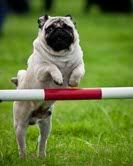
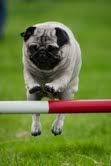
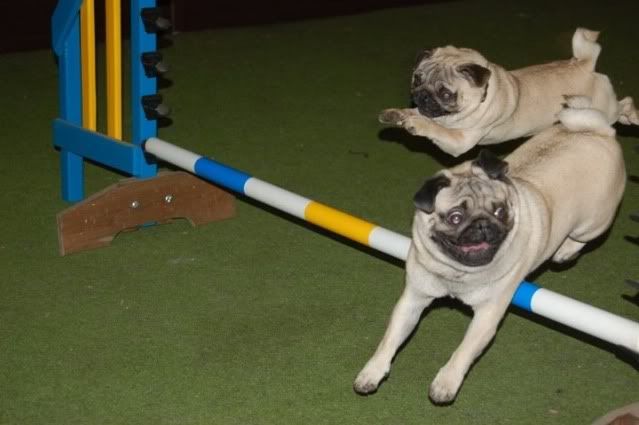
I know you have had a terrible time with Olive, but from that you seem to be considering that the whole breed suffers from the same problem. I am lucky enough to have several pugs, and to have bred a few who I see regularly,  and then to be in frequent contact with lots of other pugs at various events and get togethers.  None of these pugs have breathing difficulties.  It would be very difficult for a pug with breathing problems to compete in agility, or even to train for it, we have 1 pug who has now attained Gr 5 and his Bronze warrant, and another dozen or so in training and due to start competing.  We have a team doing displays at shows and country events - these dogs go fast and complete jumps and obstacles, they come out of the ring and can't wait to go back and do more.  The are certianly not in any breathing distress and while the handlers may be puffing and panting the pugs are not.

I know you had to have extensive surgery for Olive, but to repeat myself, the 3 pugs I know personally who Vets insisted needed surgery all turned out to have very minor cough/cold issues which resolved in a matter of 10 days or so without any veterinary intervention, so I am a little dubious of veterinary recomendations for surgery, it seems to be some vet's "go to" diagnosis without considering the actual problems, simply because the dogs are pugs and "Flat faced dogs have compromised breathing".

I do see a lot of overweight pugs puffing and panting, it is very possible that weight loss would improve the breathing greatly.  Some of these are at shows, and some out walking with owners, but then fat dogs of any breed can have breathing problems.

As we have discussed before, I am not in favour of extreme flat faces or over large nose rolls, but neither is the breed standard.  I am also doubtful of the usefulness of the opinion that pugs who are bred with longer muzzles will have improved breathing, again, repeating myself, my only long nosed pug was also my only pug with an breathing trouble.  I have also seen quite a few  pug x jack russell crosses, and whilst they have slightly longer muzzles they have appalling mouths and tiny, pinched nostrils.
- By Brainless [gb] Date 29.02.12 19:32 UTC

> but 5% is a maximum not a target.


Quite, that is why I said I still think that is a lot of litters.
- By Jeangenie [gb] Date 29.02.12 19:32 UTC

>From  the PDE blog it appears that 2 from the litter are LUA.


Yes, and 7 from the latest litter; I believe there are now 18 LUA dals in the UK, with more litters planned.
- By Olive1 Date 29.02.12 20:29 UTC
Gwen, you say you are against extremely flat faces.

But you bred this wee soul ?

http://www.pugs.nl/forums/viewtopic.php?t=4308

Can you define to me what YOU see as extremely flat?
- By Brainless [gb] Date 29.02.12 21:00 UTC
I think you'd need to see photos as adults, even my 50/50 skull to muzzle length breed the pups have squished faces as puppies up to 4 weeks, and pugs and other toy breeds ahve infatile features a lot longer (and flat faced breeds permaently shorter muzzles

Here is a headshot of one of my pups http://barbelka.awardspace.co.uk/_wp_generated/wped49f29f.jpg
- By Brainless [gb] Date 29.02.12 21:03 UTC
Ooh more from the KC re being able to see how many litters stud dogs produce and more on addressing genetic diversity here: http://www.ourdogs.co.uk/News/2011/news.php and the KC's response to the programme: http://www.thekennelclub.org.uk/item/4189/23/5/3
- By Stooge Date 29.02.12 21:15 UTC
Your link to Ourdogs does not work for me, Brainless :)
Here is a direct link to the Q&A response from the KC
- By gwen [gb] Date 29.02.12 21:56 UTC Edited 29.02.12 21:59 UTC

> Gwen, you say you are against extremely flat faces.
>
> But you bred this wee soul ?


AS Barbara said, puppy heads can grow into something quite different, and with pics a lot is down to camera angles.  The smaller pup who looks very flat faced in one shot actually had a little more muzzle than usual, although not  a long nose.  When I last saw her she was a happy, healthy pug with a hint of muzzle length, certainly not flat faced, and has become a much loved pet.

Not sure if I am allowed to post these links here or if they will work, but here are 3 pugs with a typical  (but different)pug head, none of whom have the remotest trouble breathing - and all of whom qualified for Crufts showing before taking up agility.  I don't think any of them have overly flat faces, all have moderate nose rolls and wide, open nostrils.

http://i418.photobucket.com/albums/pp268/gwenspugs/cedric.jpg
http://i418.photobucket.com/albums/pp268/gwenspugs/niko.jpg

http://i418.photobucket.com/albums/pp268/gwenspugs/NikoBumbleAgility1-1.jpg
- By MsTemeraire Date 29.02.12 22:00 UTC

> I don't know if the condition requires both parents to be carriers but shouldn't they have a 50/50 chance at least of being clear if one parent is?


If it required only ONE cross to the Pointer, and only ONE imported dog which has produced LUA offspring to a non-LUA, then my educated guess is that it is a dominant gene. Meaning - only one parent needs to have the gene to pass it on. [Much better than a recessive gene where a degree of line- or in-breeding would be needed to seed it through future generations.]

That parent can have one LUA copy, in which case it will pass on to 50% of the offspring.

It will be some time in the making, but eventually a Dalmatian will be produced here which is homozygous for the gene, two copies of LUA, meaning 100% of its progeny will have the LUA gene regardless.

So, no further outcrosses to Pointers or anything else will be required. Having said that, there may come a time when all Dalmatians in the world have the original cross in their background somewhere, which may or may not be a good thing depending on whether anything less desirable is lurking in the shadows.
Topic Other Boards / Foo / Pedigree dogs exposed
1 2 3 4 Previous Next  

Powered by mwForum 2.29.6 © 1999-2015 Markus Wichitill

About Us - Terms and Conditions - Privacy Policy